
Benefits of the ECOS Optimization Platform
For more than three decades, concrete producers have tried to put plastic waste into concrete. The hard part was never the idea. It was making it work. Simply adding plastic to a mix is not the solution, because it is well known that the performance of the concrete drops.
Our ReLite+ technology solved part of that equation. The ECOS Optimization Platform completes it. ECOS is built to address the performance loss directly, by treating the mix as a whole system rather than by adding an ingredient and hoping for the best.
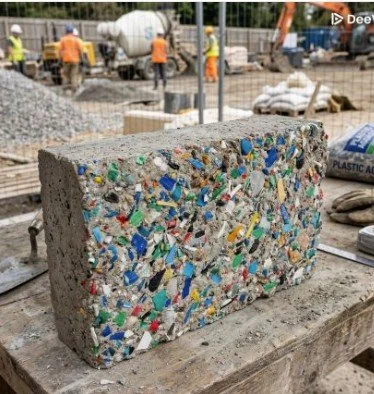

The idea: a mix has a budget, and ReLite+ changes it
Every concrete and asphalt mix has to fit inside a budget of weight, volume, cost, workability, and strength. That is why producers often cannot add the materials they know would help. The ECOS Optimization Platform decides what goes into the room it creates, using supplementary cementitious materials (SCMs) and other waste-derived materials, to give producers practical solutions to everyday problems.
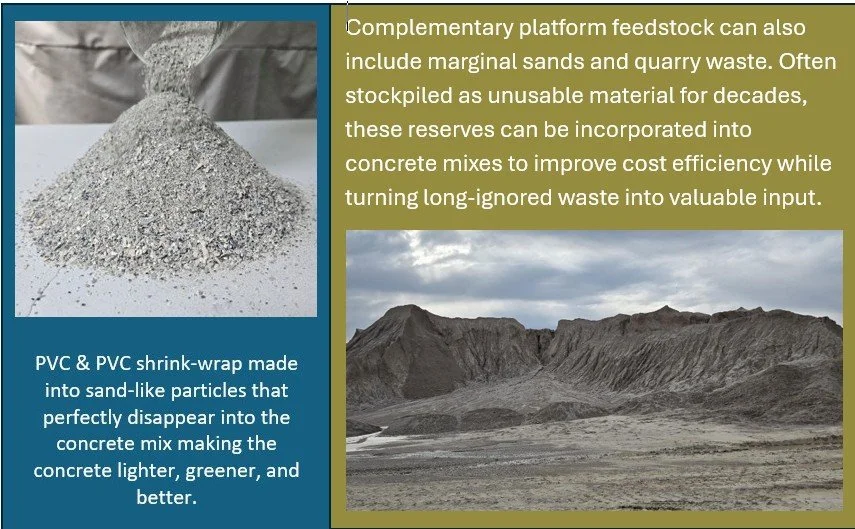
Waste-derived materials, put to work
Many of the materials ECOS uses are industrial by-products. Fly ash comes from power plants and slag from iron making (NSW Government). Using them in concrete is one of the oldest circular-economy ideas in construction. ECOS takes it further: plastic that nobody wanted creates the headroom, and waste-derived materials fill it. One waste stream opens the door for others.
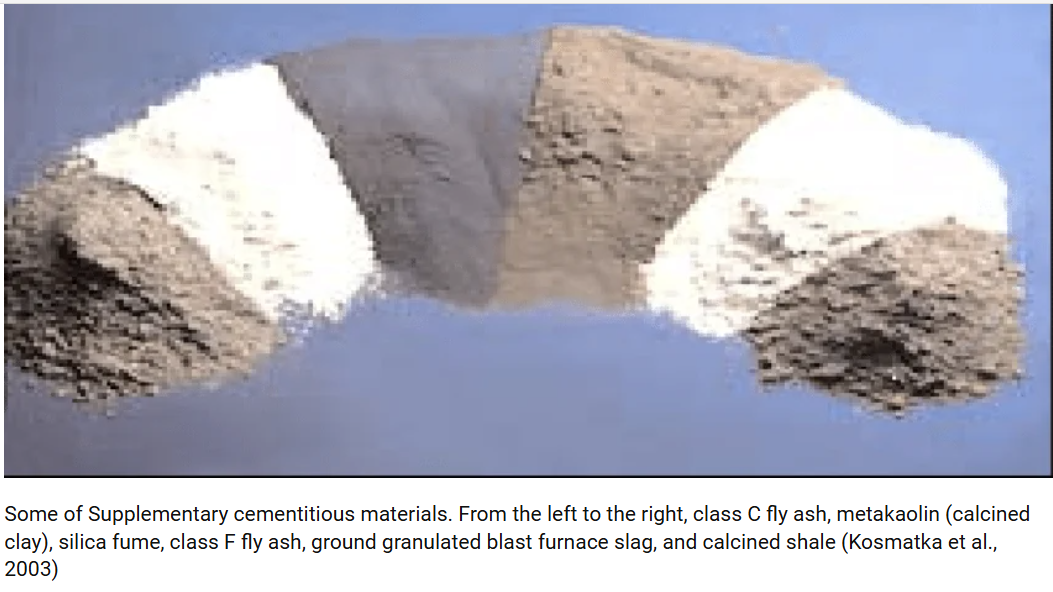
Built around the problems producers deal with every day
Alkali-silica reaction and sulfate attack. SCMs are widely used to help control alkali-silica reaction and to improve resistance to sulfate attack, mainly by reducing permeability. The effect depends on the SCM type and dose (FHWA, PCA). ECOS is designed to help producers bring the right SCMs into the mix.
Early thermal cracking. Most SCMs release less heat than Portland cement as they react, which helps reduce the risk of early-age thermal cracking (NSW Government). ECOS puts that tool to use alongside ReLite+, with the headroom to include it.
Less cement per performance. SCMs are a standard way to reduce the portland cement a mix needs, while helping with workability and durability (Caltrans). Cement is also the largest source of concrete's carbon footprint. ECOS is designed to find the right balance for each producer's mix and materials.
Porosity, brittleness, and particle packing. A mix with well-chosen particle sizes uses its space better, which tends to mean lower porosity and better durability. ReLite+ brings engineered particles, and ECOS fits them and the SCMs into a packing that works with each producer's own sand and stone.
How we work with a producer: designed around your materials
Every mix is formulated to meet the standard for its application, using the ingredients and preferences of the producer. ECOS is a platform, not a single recipe.
We start with your mix, your materials and the problems that cost you the most.
We design an ECOS formulation using ReLite+ around your products and your plant.
We support adoption, so the new mix fits the way your crews already work.
A better mix is the best sustainability story in construction
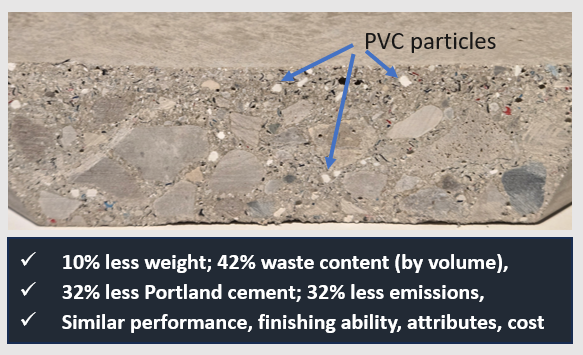
A lighter mix is easier to move.
A more durable mix is replaced less often.
A mix that uses less cement carries a smaller carbon footprint.
ReLite+ and ECOS work on all three at once, without asking producers to change their plant or pay a green-up charge. That gives your customers a credible, lower-carbon choice that does not ask them to change how they build.